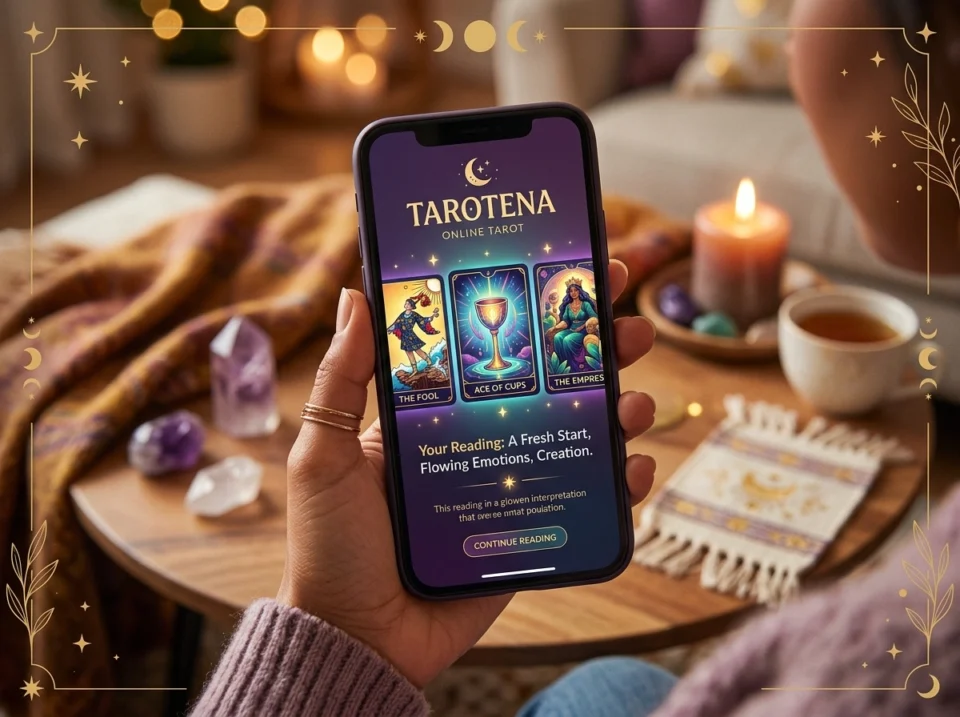
Picking up a tarot deck for the first time can feel a little like opening a book written in another language. The cards are beautiful, sure, but what do they actually mean? And how do you string 78 images into something that makes sense for your life? For many curious first-timers across the US, that uncertainty is enough to keep them on the sidelines.
That’s exactly the problem online platforms are solving. In this article, you’ll learn why tarot feels intimidating at first, how digital tools lower the barrier to entry, and which beginner-friendly features make a real difference. You’ll also get practical tips to start your first reading with confidence.
Quick takeaways:
Tarot’s learning curve scares off most beginners—but it doesn’t have to.
Online platforms remove the guesswork with guided readings and clear explanations.
Accessible design matters as much in spiritual tools as it does anywhere else.
A few simple habits help first-timers get meaningful results fast.
Why Tarot Feels Intimidating to Beginners
Let’s be honest about the hurdles. Most people who want to try tarot hit the same walls early on.
A steep memorization problem
A traditional deck has 78 cards, each with multiple possible meanings. Add reversed positions, and you’re suddenly juggling well over a hundred interpretations. For a beginner, that volume feels less like a hobby and more like cramming for an exam.
Confusing spreads and layouts
Even after you learn a few card meanings, you have to know where to place them. The Celtic Cross, three-card spreads, horseshoe layouts—each has its own logic. Without guidance, choosing the right spread becomes another source of doubt.
Fear of “doing it wrong”
This one is underrated. Many newcomers worry they’ll misread a card, offend the practice, or simply waste their time. That anxiety keeps a lot of curious people from ever shuffling a deck.
Hard-to-find, trustworthy guidance
Search online and you’ll find conflicting advice, paywalls, and plenty of vague mysticism. Sorting credible help from noise is exhausting—especially when you’re just trying to understand one card.
How Online Platforms Lower the Barrier to Entry
Digital tools have quietly transformed how people learn tarot. Instead of buying a deck and hoping a guidebook makes sense, beginners can now learn by doing in a supportive environment.
Here’s what changes when you move tarot online:
No upfront purchase required. You can explore before committing to a physical deck.
Instant explanations. Card meanings appear right when you need them.
Structure built in. Spreads are pre-set, so you never wonder where a card goes.
Privacy. You can practice alone, at your own pace, without judgment.
Platforms like Tarotena are designed around this exact need—taking the friction out of those first few readings so newcomers can focus on learning rather than logistics.
Beginner-Friendly Features That Actually Help
Not all online tarot experiences are created equal. The best ones share a handful of features that make a genuine difference for total beginners.
Simple, plain-language card explanations
The single biggest help for a newcomer is clear language. Instead of dense esoteric paragraphs, beginner-focused platforms explain each card in everyday terms. “The Tower,” for example, becomes “sudden change or a wake-up call”—not a wall of symbolism you have to decode.
By the end of a few sessions, you’ll start recognizing patterns and meanings on your own.
Guided readings that walk you through every step
Guided readings are like having a patient teacher beside you. The platform tells you when to shuffle, where to place each card, and what each position represents. You’re never left staring at a layout wondering what comes next.
This structure does two things at once:
It removes decision fatigue.
It teaches you the logic of spreads naturally, just by using them.
An intuitive, uncluttered interface
Good design fades into the background. A clean interface—with readable text, simple navigation, and clear buttons—lets you focus on the reading itself. When the technology gets out of the way, the experience feels calm rather than complicated.
This matters across a diverse US audience, where users range from tech-savvy twenty-somethings to first-time digital explorers. A tool that “just works” welcomes everyone.
Context-aware interpretations
Stronger platforms connect cards to the question you asked. Rather than reciting a generic meaning, they frame the card around your topic—relationships, career, personal growth. That relevance turns an abstract image into something you can actually use.
Why Accessibility Matters in Spiritual Tools
It’s easy to think of accessibility as a technical checkbox. In reality, it shapes who gets to participate at all.
Spiritual practices have historically carried a sense of exclusivity—as if you needed special knowledge or the right teacher to belong. Accessible online tools push back on that idea. They open the door to:
People who learn better visually or interactively.
Users in rural areas without access to local readers or shops.
Anyone on a budget who can’t invest in decks, books, or paid sessions upfront.
Newcomers who feel more comfortable exploring privately first.
When a platform respects different backgrounds, learning styles, and comfort levels, it makes a centuries-old practice feel genuinely welcoming. That inclusivity is the whole point.
Tips for First-Time Tarot Users
Ready to try your first reading? A few simple habits will set you up for a better experience.
Start with a single-card pull
Forget complex spreads on day one. Pull one card and ask a simple, open question like “What should I focus on today?” One card, one insight—that’s plenty to build confidence.
Ask open-ended questions
Tarot works best with questions that invite reflection, not a flat yes or no. Instead of “Will I get the job?” try “What can help me move forward in my career?” You’ll get richer, more useful answers.
Read the meaning, then trust your reaction
Use the platform’s explanation as a starting point, but notice your own first impression too. Tarot is partly a mirror—your gut response to a card often reveals what’s on your mind.
Keep a short reading journal
Jot down the card you drew and what it brought up for you. Over a few weeks, you’ll spot patterns and watch your understanding grow far faster than memorization ever could.
Be patient and consistent
You don’t need to master 78 cards overnight. A few minutes a day beats one marathon session. Treat it as a relaxing habit, not a test.
Final Thoughts
Tarot doesn’t have to be intimidating, and you don’t need years of study to start. The combination of plain-language explanations, guided readings, and thoughtful, accessible design has made online reading something almost anyone can try today.
If you’ve been curious but unsure where to begin, start small: pull one card, ask one good question, and let the experience teach you the rest. With beginner-friendly tools doing the heavy lifting, your first meaningful reading is closer than you think—so go ahead and give it a try.
