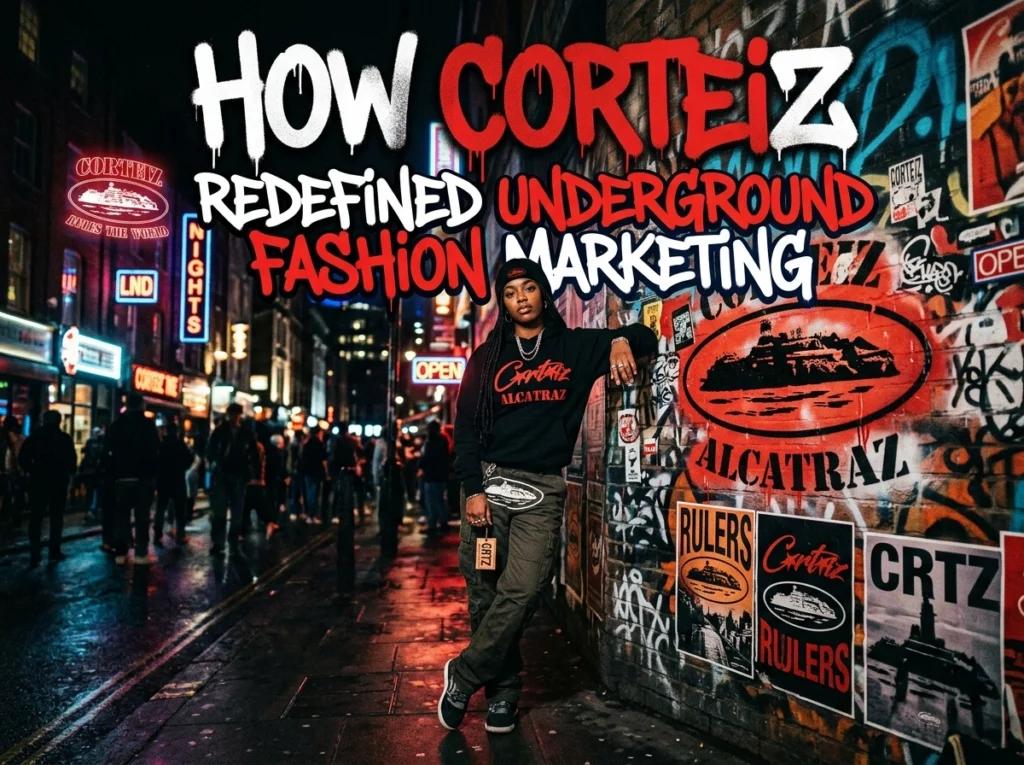
Every so often, a brand comes along that flips the rules of an entire industry. In streetwear, that brand is Corteiz. What started as a small underground label in the United Kingdom has grown into a cultural force, and it did so without following any of the traditional marketing playbooks. No glossy billboards. No massive ad budgets. No celebrity endorsement deals paid out through agencies. Instead, Corteiz built something far more valuable: genuine hype and a loyal community that treats the brand like a movement.
For marketers and fashion enthusiasts across the United States, the Corteiz story offers a masterclass in how to build demand through mystery, scarcity, and authentic connection. Let's break down how this happened and what your brand can learn from it.
The Origins of Corteiz
Corteiz was founded in 2017 by Clint Ogbenna, better known as Clint419, in West London. From day one, the brand carried an anti-establishment attitude. Its logo, the Alcatraz island symbol paired with the slogan "Rules The World," signaled that Corteiz wasn't interested in playing by fashion's usual rules. It positioned itself as an outsider, a brand for people who felt the mainstream didn't speak to them.
This origin matters. Corteiz didn't launch with venture capital funding or a corporate strategy deck. It grew from the streets of London, rooted in real culture and community. That authenticity became the foundation for everything that followed. In an era where consumers can smell manufactured marketing from a mile away, Corteiz felt real because it was.
Unconventional Marketing Tactics
Here's where Corteiz truly separated itself from the pack. While most brands chase visibility, Corteiz deliberately made itself hard to find.
The password-protected website. For a long time, the Corteiz online store was locked behind a password. You couldn't just stumble onto the site and buy something. You had to be in the know. This simple move turned shopping into an insider experience. Access itself became a status symbol, and that exclusivity drove people to seek out the brand rather than the other way around.
Guerrilla drops. Corteiz became famous for surprise product releases announced with little warning, often through cryptic social media posts. These drops created a frenzy. Fans had to stay glued to their phones, ready to move the moment an announcement dropped. The unpredictability kept the community engaged and alert at all times.
Exclusive real-world events. Corteiz mastered the art of the in-person spectacle. One of its most talked-about stunts, the "Bolo Exchange," invited people to trade their expensive designer jackets, like North Face and Moncler pieces, for a Corteiz jacket costing just a fraction of the price. The event caused chaos in the best way, generating enormous buzz and endless user-generated content. Another campaign sold cargo pants for just 99 pence, with locations revealed at the last minute, causing crowds to swarm across London.
These tactics weren't random. Each one reinforced the idea that being part of Corteiz meant being part of something special, something you had to work to access.
Building Hype Through Scarcity and Community
Scarcity is one of the oldest tricks in marketing, but Corteiz executed it with rare precision. Products sold out almost instantly, and the brand rarely restocked. This created a secondary resale market where items traded for well above retail price, further cementing the brand's desirability.
But scarcity alone doesn't build loyalty. Community does. Corteiz treated its followers like members of a club rather than customers. Clint419 spoke directly to fans, responded to comments, and made people feel seen. The brand celebrated its supporters and gave them a sense of ownership over its success. When people feel like they belong to something, they don't just buy the product. They defend it, promote it, and evangelize it.
This combination of scarcity and community proved powerful. Demand consistently outstripped supply, and every sold-out drop reinforced the brand's mystique.
Social Media Without Traditional Advertising
Perhaps the most remarkable part of the Corteiz story is that it grew almost entirely without paid advertising. In a world where brands pour millions into ad campaigns, Corteiz relied on organic reach and word of mouth.
The brand's social media presence, particularly on Instagram and later on other platforms, became its primary marketing engine. Posts were often minimal, cryptic, and deliberately mysterious. This approach worked because it respected the audience's intelligence. Instead of shouting for attention, Corteiz whispered, and people leaned in to listen.
User-generated content did the heavy lifting. Fans posted their purchases, shared drop experiences, and spread the brand's message far beyond London. Every satisfied customer became a walking advertisement. This organic model kept marketing costs low while building an aura of authenticity that money simply cannot buy.
Cultural Impact and Celebrity Co-Signs
As Corteiz grew, it caught the attention of major cultural figures. Artists, athletes, and celebrities began wearing the brand, not because they were paid to, but because they genuinely wanted to be associated with it. Stars like Central Cee, Stormzy, and even global names helped push Corteiz into wider view. In the United States, the brand gained traction as American streetwear fans discovered its rebellious energy.
These co-signs mattered because they felt organic. When a celebrity wears something by choice rather than contract, it carries far more weight with fans. Corteiz never seemed to chase these endorsements, which made them all the more valuable. The brand's cultural relevance grew naturally, tied to music, sport, and youth culture on both sides of the Atlantic.
Lessons Other Brands Can Learn
The Corteiz playbook holds valuable lessons for marketers everywhere, especially those trying to break through the noise in the crowded American market.
Authenticity beats budget. You don't need millions in ad spend to build a beloved brand. You need a real story and a genuine connection with your audience. Corteiz proved that meaning matters more than money.
Make people work for it. Easy access can cheapen a brand. By creating barriers and exclusivity, Corteiz made membership feel earned. Consider how a little friction can increase perceived value.
Build community, not just customers. Treat your audience like insiders. Talk with them, not at them. When people feel ownership, they become your best marketers.
Embrace scarcity thoughtfully. Limited availability drives demand, but it must feel authentic rather than manipulative. Corteiz balanced supply and hype with real skill.
Let culture carry you. Root your brand in genuine cultural moments. When your brand becomes part of the conversation people already care about, growth follows naturally.
Final Thoughts
Corteiz didn't just sell clothes. It sold belonging, rebellion, and a sense of being part of something bigger. By rejecting the traditional marketing rulebook, it built a brand that feels less like a company and more like a movement. Its rise from the streets of London to global recognition shows that in modern marketing, authenticity, community, and clever scarcity can outperform even the biggest advertising budgets.
For any brand looking to make its mark, the message is clear. Stop shouting, start connecting, and give people a reason to believe. That's how Corteiz rules the world, and it's a lesson worth remembering.
Related reading: