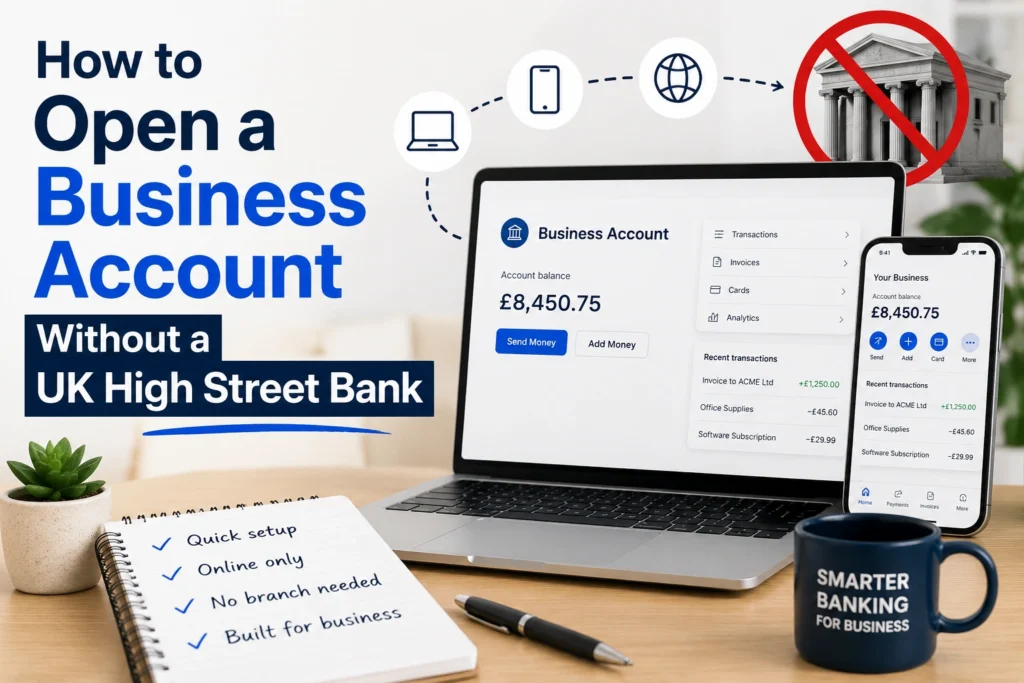
Opening a business bank account without a traditional UK high-street branch is possible, but the best option depends on your business structure, where you operate, how customers pay you and the services you actually need. Online and app-based providers can make applications faster, while established banks may offer branches, cash services and wider support.
This guide explains the practical questions to ask before choosing an account. It is general information, not financial advice. Eligibility, fees, protection and account terms vary, so read the provider’s current information before applying.
Why businesses use a dedicated account
A separate account makes it easier to track sales, expenses, tax provisions and supplier payments. It also gives customers and business partners a clearer payment identity. Keeping business and personal money separate can make bookkeeping and year-end reporting much easier, even when you are operating as a sole trader.
Do not choose an account only because the application is quick. A good account should support your normal payment methods, provide useful records and give you a clear way to resolve problems.
High-street, digital and specialist options
High-street banks may offer branches, cash deposits, relationship support and established business services. Digital providers may offer quicker online applications, real-time notifications, accounting integrations and convenient access for remote teams. Specialist providers may focus on freelancers, international payments or particular business types.
Each model has trade-offs. Digital access can be convenient, but check customer-support hours and what happens if the app or account is restricted. A specialist provider may be useful for international payments, but you should confirm its legal entity, fees and the countries it supports before transferring business money.
What you may need before applying
Providers commonly ask for identity information, business details and an explanation of how the account will be used. Depending on the structure, you may need:
- your name, date of birth and contact details;
- proof of identity and, in some cases, proof of address;
- the business name, trading address and contact information;
- registration details or a company number if you operate through a limited company;
- information about directors, owners or people with significant control;
- an estimate of expected turnover, payment types and international activity.
New businesses may not have a long trading history. Be honest about your plans and keep supporting documents ready. A request for additional information does not automatically mean something is wrong; providers have to understand customers and manage financial-crime risks.
How to apply online
- Define the account’s job. Decide whether it will receive sales, pay suppliers, manage payroll, hold tax money or handle foreign currency.
- Compare eligibility. Check whether the provider accepts your structure, industry, directors and countries of residence.
- Check the full price. Look beyond a free introductory period and compare transfers, cash, cards, foreign exchange, extra users and accounting connections.
- Use the official website or app. Avoid applying through an unexpected link or giving documents to an unverified intermediary.
- Complete verification accurately. Inconsistent names, addresses or business descriptions can lead to delays.
- Test the account carefully. Start with normal transactions, set alerts and confirm that statements contain the information your bookkeeper needs.
Questions to ask before choosing
Ask how quickly payments arrive, whether the account supports direct debits and standing orders, how many cards or users are included, and what happens if you need to dispute a transaction. If you sell online, check whether the payment platform can pay the account and whether there are settlement delays.
International businesses should compare exchange rates, transfer fees, supported currencies, beneficiary checks and the provider’s process for reviewing unusual payments. Never buy or rent an account in someone else’s name. Account sharing can expose your business to fraud, frozen funds and serious legal problems.
Keep business banking secure
Use a unique password, multi-factor authentication and separate user access for staff or contractors. Give each person only the permissions they need. Confirm new supplier bank details through a trusted channel, particularly when an invoice contains a changed account number.
Be cautious of calls or messages asking you to move money to a “safe account”, reveal a one-time code or install remote-access software. Use the contact details on your provider’s official website or statement. The FCA’s consumer guidance explains how to protect yourself from scams and what to do when you suspect fraud.
Business account checklist
- Confirm the provider accepts your business type and trading countries.
- List every likely fee, including cards, transfers, cash and foreign exchange.
- Check how statements and accounting integrations work.
- Understand support channels and account-review procedures.
- Keep personal and business spending separate.
- Set aside money for tax and future bills.
- Review the account after the first few months against your actual usage.
Frequently asked questions
Do I need a high-street bank?
No. An online provider may be suitable if it meets your business needs and eligibility requirements. A branch-based bank may be preferable if you regularly handle cash or want face-to-face support.
Can a new business open an account?
Often, yes, but the provider will still need identity, ownership and business information. A clear explanation of what the business does and how money will move through it can make the application easier to assess.
Should I use a personal account for business?
That depends on your structure and the provider’s terms, but mixing money makes records harder to manage and may breach an account’s conditions. A dedicated business account or a clearly separated business-banking arrangement is usually easier to administer.
Useful references: read GOV.UK’s business set-up guidance, MoneyHelper’s guide to opening and managing a bank account, and the FCA scam-safety guidance. On Fapeza, you can also compare this with our guide to getting a UK debit card and our editorial standards.
