Finance

How to Get a Debit Card in the UK

How to Get a Debit Card in the UK

Getting a debit card in the UK is usually straightforward when you open a current account or another account that includes card access. A debit card lets you spend money already held in your account, pay in shops and online, and withdraw cash. The exact eligibility checks, fees and features vary between providers, so compare the account rather than choosing a card on appearance alone.

This guide explains the normal application process, the documents you may be asked for, what to check before applying, and how to use a debit card safely. It is general information, not personal financial advice. Always read the provider’s current terms before opening an account.

What is a debit card?

A debit card is linked to a bank or payment account. When you make a purchase, the money normally comes from the available balance in that account. This differs from a credit card, where you borrow money and may pay interest if you do not clear the balance. A prepaid card is different again because you normally load money onto it before spending.

MoneyHelper explains that debit cards can be used in shops, online, over the phone and at cash machines. Some accounts also offer contactless payments, mobile-wallet support, spending notifications and temporary card freezes through an app.

What you usually need to apply

Most providers need enough information to verify your identity and assess whether the account is suitable. You may be asked for:

  • your full name, date of birth and contact details;
  • proof of identity, such as a passport or driving licence;
  • proof of address, such as a council tax bill, utility bill or tenancy document;
  • your UK address and residency details, where the account requires them;
  • information about your income or expected account use for some account types.

Requirements are not identical. A basic bank account may have different eligibility rules from a standard current account, and some providers offer accounts for young people, students or customers who have difficulty passing a standard credit assessment. Do not assume that an online advert promising instant approval is suitable or regulated.

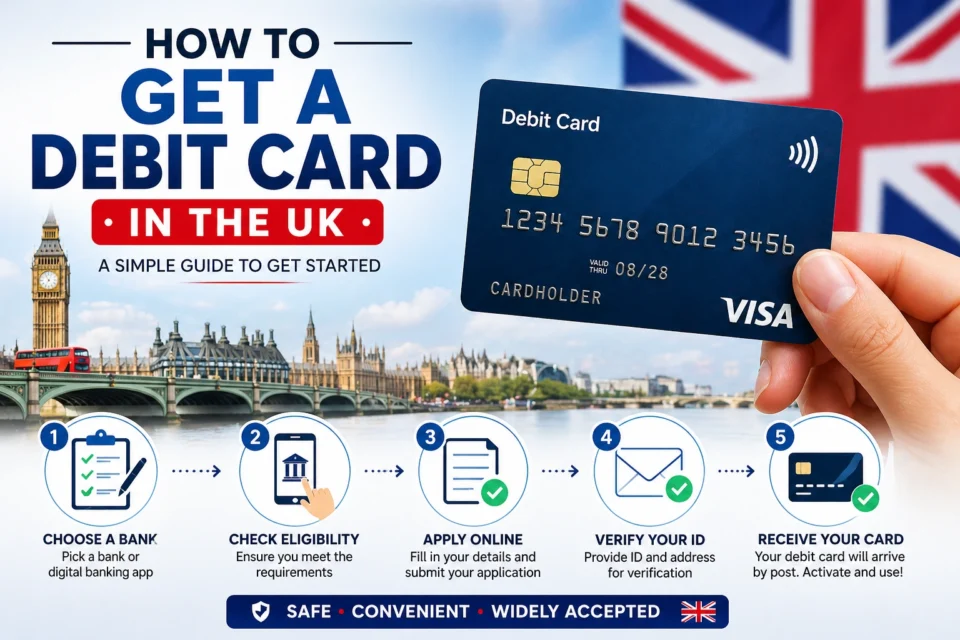
How to get a debit card in the UK

  1. Decide what you need. Check whether you need a current account, a basic account, a student account or a card for a young person.
  2. Compare the important features. Look at monthly fees, cash-withdrawal charges, overseas use, contactless limits, app controls, customer support and how to report fraud.
  3. Check eligibility before applying. Some providers offer an eligibility checker that may not leave a full credit-search footprint.
  4. Apply through the official provider. Use the bank’s own website, app or branch. Avoid links sent unexpectedly by text, email or social media.
  5. Complete identity checks. The provider may ask for documents, a selfie or additional information. This is a normal part of account security, but only submit information through a verified channel.
  6. Set up your PIN and security controls. Keep the PIN private, enable transaction alerts and learn how to freeze the card in the app if that option is available.

If you do not have a UK address

People who are new to the UK, studying here or living between countries may find that account requirements differ. Some providers may accept alternative identity or address documents, while others require a UK address before they can open a standard current account. Ask the provider what documents it accepts instead of paying a third party that promises to bypass checks.

If a normal current account is not available, investigate whether a basic account or an account designed for your circumstances is more appropriate. MoneyHelper has guidance on basic bank accounts and the documents that may help with identity checks.

Costs and features to compare

A debit card is not automatically free in every situation. Before applying, check for:

  • monthly account or premium-plan fees;
  • cash-machine charges, especially outside the provider’s network;
  • foreign-exchange and overseas-use fees;
  • replacement-card or expedited-delivery charges;
  • limits on cash withdrawals, transfers or contactless payments;
  • support hours and the process for disputing an unauthorised payment.

A card with a low headline fee may still be expensive for frequent overseas spending or cash withdrawals. Choose features that match your normal use and keep a record of the provider’s current pricing page.

How to keep a debit card safe

Never share your PIN, full card details, online-banking password or one-time security code with someone who contacts you unexpectedly. Banks, the FCA and the police will not ask you to move money to a “safe account” because of a surprise phone call. Type the provider’s website address yourself or use the official app rather than clicking an unverified message.

If you notice an unauthorised payment, contact the bank immediately using the number on your card or statement. The FCA also advises consumers to act quickly when they discover fraudulent payments. Freeze the card if possible, change compromised passwords and keep screenshots or messages that may help with an investigation.

What if your application is declined?

A declined application does not necessarily mean that you cannot get any debit card. The provider may need more information, may not support your residency status, or may decide that another account type is more suitable. Ask whether it can explain the reason, check your credit file where relevant, and compare basic-account options without submitting repeated applications in a short period.

Frequently asked questions

How old do you have to be to get a debit card?

Age rules depend on the account and provider. Some UK accounts are available to young people from around age 11, but parental consent and other conditions may apply. Check the current eligibility rules directly with the provider.

Can you get a debit card without a bank branch?

Many providers let you apply through an app or website, although identity checks may still require documents or a video check. Online-only does not mean that the account is automatically better, so check support and fees before applying.

What should you do if your debit card is lost?

Freeze it in your banking app if possible and contact the provider immediately. Do not wait to see whether it turns up, particularly if the PIN was kept with the card.

Useful official guidance: MoneyHelper on using debit cards, MoneyHelper on basic bank accounts and the FCA guide to protecting yourself from scams. For more practical UK money reading, see Fapeza’s guide to opening a business bank account and our editorial standards.

About the author

Ronald Palmer

Ronald Palmer is a contributing writer and editor at Fapeza UK. He covers practical technology, business, consumer and everyday-life topics for readers in the United Kingdom, with an emphasis on clear explanations, useful context and fair comparisons. His articles are developed from credible public information and primary sources where available, then reviewed against Fapeza’s editorial standards for accuracy, sourcing, commercial disclosure and updates. Ronald’s editorial focus includes digital tools, small-business operations and practical consumer decision-making. Fapeza’s guides are informational and do not replace personalised medical, financial or legal advice. Readers can submit corrections or source suggestions through the Contact Fapeza UK page.

Read our editorial standards →